Daniel Augusto da Silva Network

Description
The Daniel Augusto da Silva Network is a programme to support small-scale, intensive research collaborations, bringing together carefully selected groups of researchers to work on ambitious mathematical problems. The emphasis is on providing exceptional working conditions in a fully immersive environment that encourages sustained interaction and creative problem-solving. These focused research periods may be complemented by workshops or medium-sized conferences, promoting broader engagement with the community.
A defining feature of the initiative is its decentralised structure. Rather than investing in a single dedicated institute, the network will rely on partnerships with existing venues across Portugal, selected for their suitability and capacity to host high-level research activities. These locations will form a distributed infrastructure, ensuring both cost-effectiveness and broad geographical coverage, while also taking advantage of Portugal’s attractiveness to international researchers.
Venues
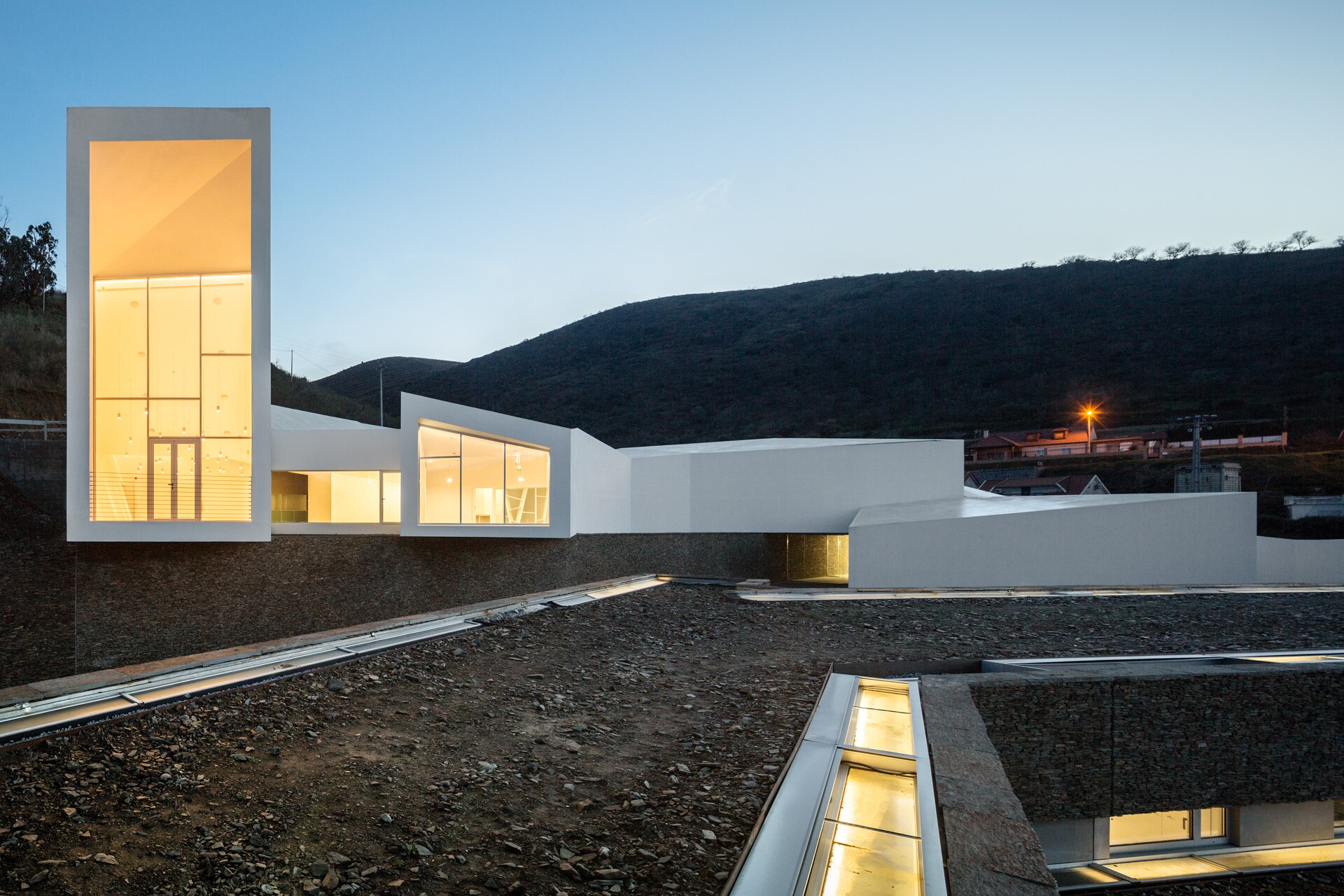
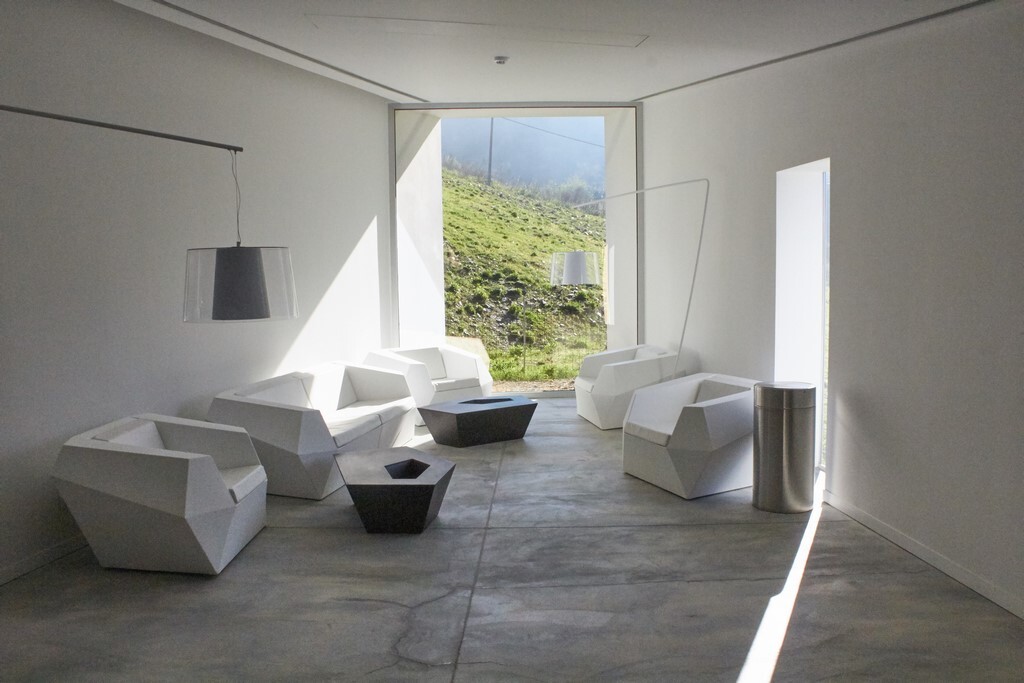
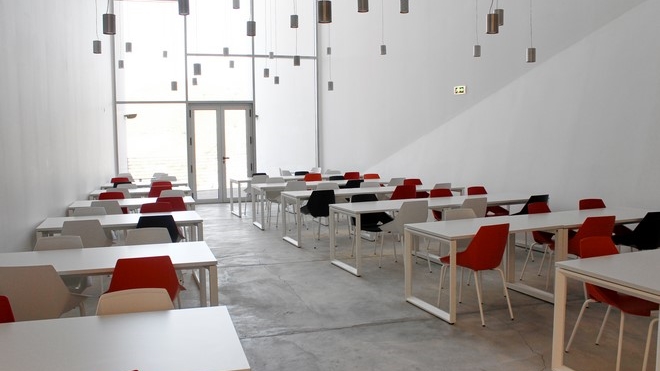
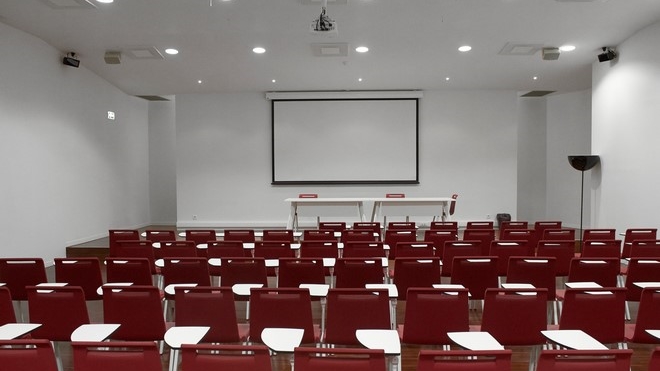
Centro de Alto Rendimento do Pocinho
 |
 |
 |
 |
 |
 |
Programme participation fees
Annual participation fees for CIM's associates only
| Level 1 | Level 2 | Level 3 |
| 2.500 € | 5.000 € | 10.000 € |
CIM also welcomes participation by groups of researchers not necessarily sponsored by any of CIM's associates. Please, contact CIM's team (hcolaco.cim@gmail.com) to check availability and accommodation rates.
Format and application guidelines
The programme is designed for teams of 2–5 researchers, though applications from larger teams may also be considered on an individual basis. We encourage projects from all areas of mathematics.
Application materials:
- A short description of the research project (1–5 pages)
- CVs of each of the team members
The complete application should be submitted as one PDF. The application should also indicate the intended length of the stay/programme (minimum 5 days).
As this programme is just beginning, funding is currently limited. We are actively seeking additional sponsorship, and we encourage interested researchers to follow future calls, which will be announced here and on CIM’s homepage.
As mentioned above, we also welcome groups that are able to cover their own participation costs; such groups may submit an application at any time. To maximise availability at the designated venues, please contact CIM's team as early as possible. Following a brief evaluation, CIM will assist with arranging accommodation. Inquiries about the programme, including costs, are welcome and should be directed to the CIM's team (hcolaco.cim@gmail.com).
Upcoming events
Fractional macroscopic fluctuation theory for lattice gases with long-range interactions, Research Team: Patrícia Gonçalves -- PI (IST, University of Lisbon), Cédric Bernardin (HSE University), and Milton Jara (IMPA), Previewed for 2027.
Abstract:
The Macroscopic Fluctuation Theory (MFT) provides a complete thermodynamic description of non-equilibrium steady states for diffusive systems with short-range interactions. In [BC25], MFT has been extended to superdiffusive systems with long-range interactions, but only for Ginzburg-Landau (GL) type dynamics, a class of interacting diffusions driven by Gaussian noise. For lattice gases -- such as the Symmetric Simple Exclusion Process (SSEP) -- the microscopic dynamics are pure jump processes driven by Poissonian noise. For the latter, the large-deviation properties are expected to be genuinely non-Gaussian. In this two-week intensive collaboration, building on extensive preparatory work, we will finalise the foundations of emph{fractional MFT for lattice gases}, focusing on the boundary-driven long-range SSEP in one dimension.
[BC25] C. Bernardin and R. Chetrite. Macroscopic fluctuation theory for ginzburg-landau dynamics with long range interactions. Journal of Statistical Physics, 192:7, 2025.
Past events
Road Closure Conjecture, Research Team: Joao Araujo (NOVA University Lisbon), Rosemary Bailey (University of St Andrews), Peter Cameron (University of St Andrews), Pablo Spiga (Università degli Studi di Milano-Bicocca), June 2026.